








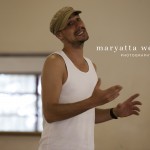


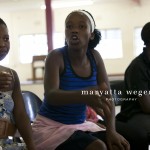
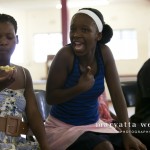

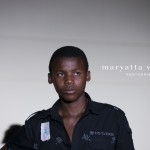


















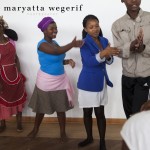



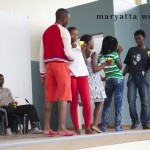





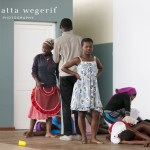

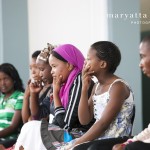


























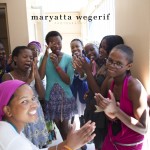



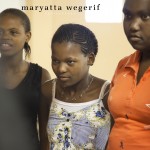
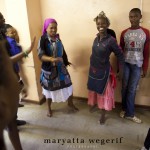
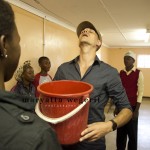


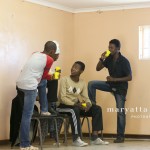


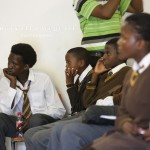

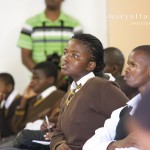

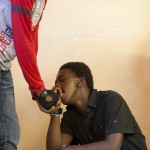
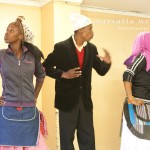





What has Sushi got to do with the rural areas of the Eastern Cape in South Africa? Exactly nothing, I guess. And yet I heard the word “sushi” many times during the last week. It is a symbol for a better life; a hope that one-day this delicacy will be affordable. It represents everything that seems to make a criminal life worthwhile. A dream of an unknown food told by a smitten girl to her positive HIV tested Boyfriend.
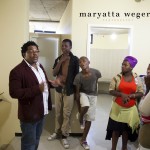
I just arrived back from a very intensive and emotional trip to King Williams Town where I documented parts of the Pilot project “AID the FUTURE”.
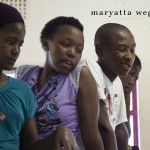
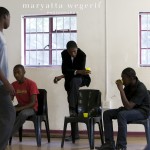
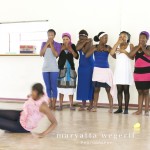
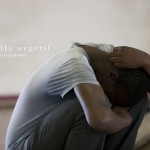
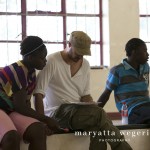
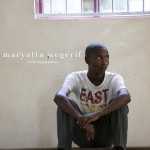
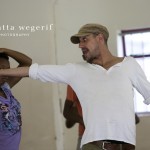
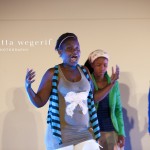
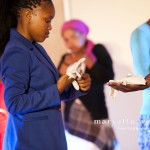
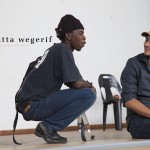
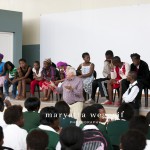
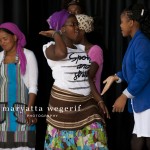
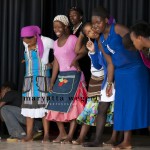
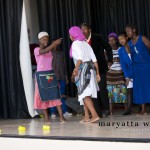
13 pupils from the Zanovuyo Senior School in Frankfort (Eastern Cape) rehearsed two weeks long after every exhausting school day for four to five hours in the community hall of Frankfort. I joined the project after one and a half weeks and was overwhelmed by the intensive examinations, the wild debates, the concentrated work and the host of incredible different emotions. Problems in life and the surrounding community, the circumstances of HIV, love, friendship, fears and violence are the themes with which the 13 scholars dealt with during the project. They conceptualised and wrote an own theatre play that caused goose pimples from the very first time I saw it and that till the last performance surprised with their beautiful lively improvisations.
“The Core of the Apple” describes both in Xhosa and in English frighteningly exactly the circumstances of being a youth in a community that is riddled by death, violence, rape, crime, sickness, poverty, helplessness and hunger.
I thought a lot about my own youth during the last week. The intensive and disturbing emotions, the insecurity and the hassle with life that no grown up seems to understand. That was quite a tough and also beautiful time. But then, I grew up in Germany where I was secure and safe with both my parents a live and enough food to eat. The youth in large parts of the Eastern Cape are not quite as lucky. Next to going through an anyway difficult teenage time they have to cope with completely different and worse problems. „Our Youth does not fail. We just find ways that will work“, says Athi, a “concerned teenager”. He describes the temptations of their daily life, the possibilities one gets offered to earn a bit of pocket money with robbery, get a bit of comfort in drugs or get rid of a bit of anger by being violent. Again and again I heard the sentence “this is our reality”. One of these realities is, as we know in South Africa, rape. In the play is a scene that describes how three boys rape a girl. Another boy comes to help her and gets infected with HIV through her blood on his hands. The gossip and rumours that immediately start after his test is another sad and destroying reality in a lot of South African communities. But the important message of the play is in the end a message full of hope and willingness to challenge all problems: „The ball is shaking in our hands and we are willing to score and go further with our future“. And that is exactly what the 13 participants of the Pilot project from AID the FUTURE started with, by converting the idea of the project.
The base background for the idea and realisation of AID the FUTURE is the missing communication between the generations. In the past 40 years the gap between grown ups and teenagers appears to have grown. No longer do the youth want to gain second-hand experiences and knowledge through the grown ups. More and more the youth of today wants to gain their own experiences and make their own mistakes. They want to solve the problems in their own way and make new pathways. And that is exactly what AID the FUTURE aims to. The project animates pupils to create a play in their own words with their own themes and act it out in front of other scholars of a similar age. After the play a debate between actors and audience about the acted problems and possible solutions is intended. The Pilot project showed how well this concept works.
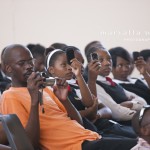
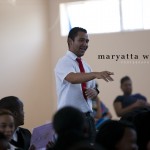
The official premiere on Saturday, 9th February, in the newly build Steve Biko Centre in King William’s Town, was very exiting and successful. But the real challenge and project started the following Monday. Then the 13 young actors played for the first time in front of 300 pupils from another school, who where mainly older than them. The excitement and anxiousness was huge. The performance was a wonderful and loud spectacle. The young audience could hardly stay quiet. Aghast calls, compassionate tong-clicks, whistles, laughter, comments and spontaneous applause indicated just how much the pupils were involved with what they saw. The following discussion between the scholars was very emotional, honest and full of admiration for the courage the 13 pupils showed by playing all these difficult themes in front of other teenagers.
From Monday till Friday the volunteer actors played in 6 schools. I accompanied them until Wednesday. Each performance I saw was different and the focus during the following discussions changed. The themes that moved the pupils the most on Monday were Friendship, love and violence. On Tuesday the focus was lying on Gossip and the fear of becoming criminal as well as the fear of HIV. Wednesday on my last performance I was impressed by the fierce debate about sex and friendship.
What I found quite incredible was that a lot of the young audience mentioned their unwillingness to discuss these themes with grown ups and how glad they were to be able to debate so open and freely. I myself was always again impressed by every performance and the following discussion. During the premier I suddenly noticed that I was ignoring my camera being totally absorbed and was actually crying because the messages of the play I had heard so often already had a new strength and intensity that was overwhelming. During the following performances I caught myself over and over again forgetting the camera and just experiencing the always different and intensive show.
I seldom experienced such an intense, exiting and very emotional week. I know that this project must have a future. Because it is tailor made for the coming generation that wants to take charge of the problems in its own way and is willing to be courageous and strong to make a change. The projects helps the youth to create their own communication platform in a very creative and expressive way.
AID the FUTURE is a cooperation project between the German NGO Culture for Development, Empilisiweni Masimanyane AIDs Centre and the Steve Biko Centre in King Williams Town.
]]>Violence, rape, poverty and a sense of abandonment are increasingly common problems in South Africa. Violence against women and young girls in particular has increased dramatically over the course of the last decades. The Masimanyane organization, its name meaning “let us unite”, was launched in 1995 by Dr. Leslie-Anne Foster. Its aim is to offer gender-sensitive service to women affected by violence. One all too common result of the increasingly violent attitudes and acts against women is the spread of HIV in South Africa.
In 2002, the organization founded its Empilisiweni (A Healthy Place) initiative in King Williams Town.

It is the stated ambition of Empilisiweni to educate the public about the problem of HIV and Aids. Sex remains a taboo subject, especially in the rural world of the Eastern Cape province. HIV infections are commonly related to sexual intercourse alone, and sufferers are stigmatized by society. The effect is an unwillingness among people to take HIV tests and among HIV-positive people to “come out” by using preventative measures, such as protected sex, avoiding breastfeeding, caesarean sections etc.
One of the key themes of the campaign tackles exactly this problem: “Remove the Stigma – know your status!” It aims to treat HIV as a disease just like many other common diseases, such as tuberculosis, cancer, or diabetes.
The men and women working on the campaign try to visit as many people as possible in their homes and talk to them about violence, sex, and diseases and their consequences. This is supported by public information events in schools, hospitals, and in the communities, as well as thorough health checks that are offered on site and free of charge. The campaign involves local community leaders, politicians or the police, as well as religious and traditional leaders.
The photo designer Maryatta Wegerif (36) has accompanied Empilisiweni for two weeks in its work in the villages. She has produced a photo essay with impressive images from the very heart of the Xhosa community of the Eastern Cape. She was invited into people’s homes and found friends that gave her a unique insight into the lives of the Xhosa people.
An exhibition of these images can bring the situation in South Africa closer to the people of Germany. The HIV disaster should not be forgotten by the football fans enjoying the 2010 Fifa World Cup hosted by South Africa. The many organizations who have committed themselves to fighting the spread of HIV in the country need reliable support and assistance. Fighting the disease also means fighting the seemingly insurmountable hurdles of tradition, the lack of awareness and education, and widespread ignorance about the disease. Many organizations are working on HIV prevention, aid for HIV sufferers, and help for their dependants. Their fight can seem hopeless in view of the overwhelming flood of new infections that shows little signs of lessening: even today, the rate of new infections in the Eastern Cape province lies at 1500 people every day.
In addition to the pictures of the people, places, and lives encountered by Empilisiweni, information material and an AV presentation about the work, health screenings, and the background of Empilisiweni is also available.
]]>Hier geht es zum Artikel auf Deutsch.
The Organization Empilisiweni Masimanyane works against ignorance about AIDS and the stigmatization of HIV sufferers.
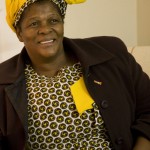
Buyiswa Mhambi is a joyful woman who seems to burst with energy and a sheer zest for life. The 58-year old South African from the Xhosa people uses every opportunity to burst into laughter. Her loud, hearty laughter seems to shake her entire body and overwhelms the people around her. She needs this to counter the intolerance, ignorance, stigmatization, and the many taboos around her, for Buyiswa Mhambi is fighting in a war – a war against the deadly HIV virus and its wildfire spread in South Africa.
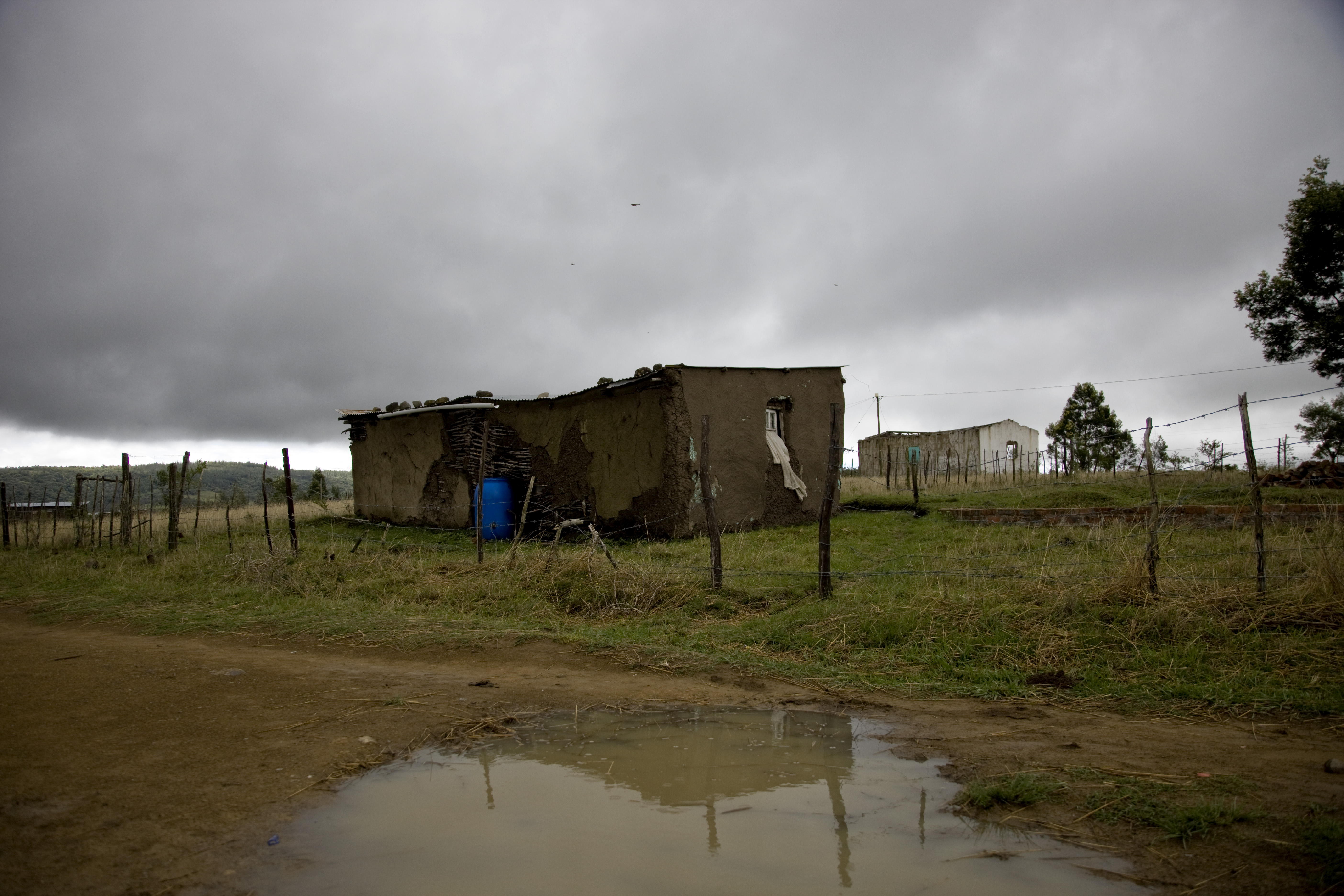
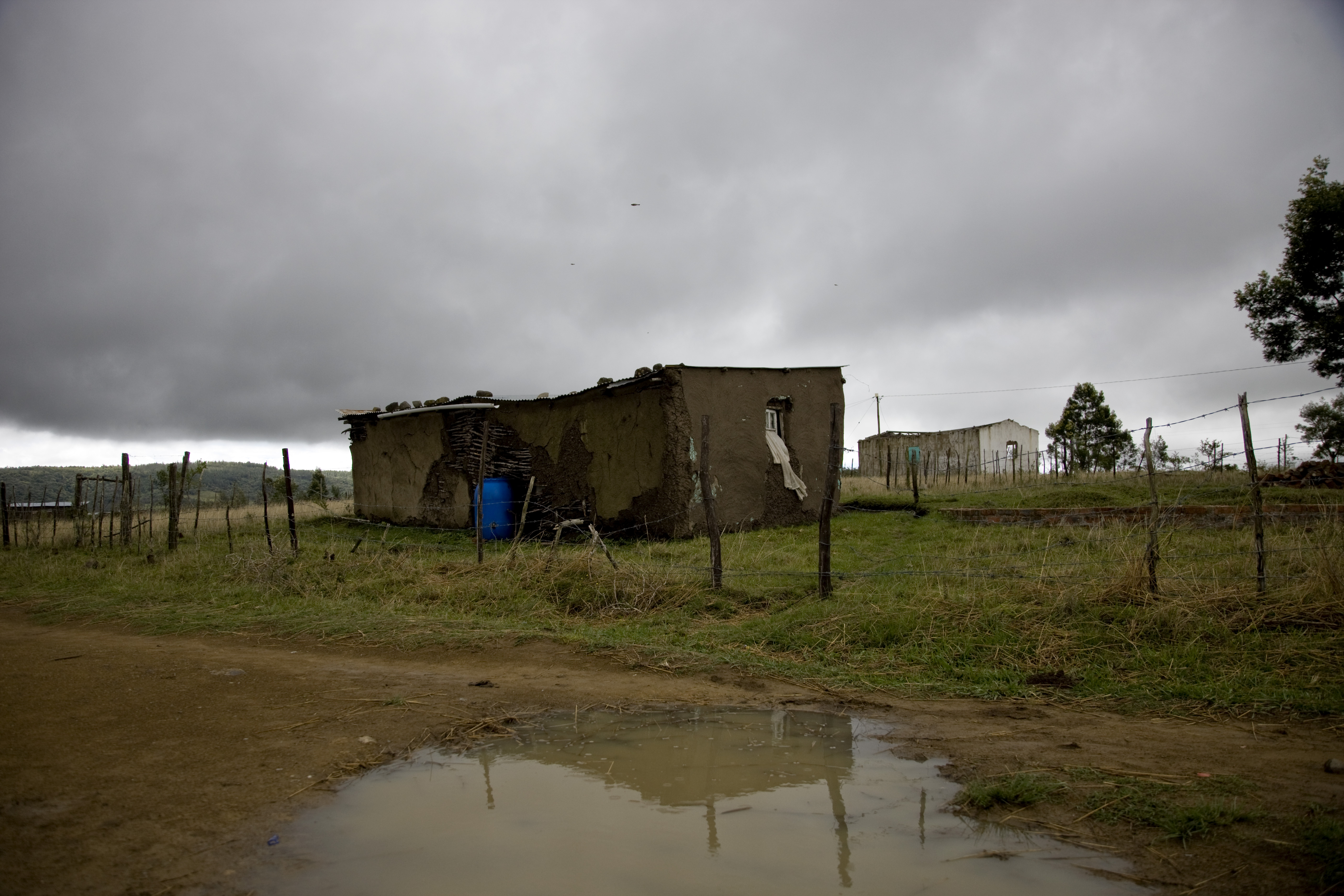

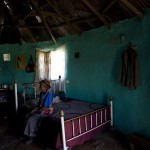
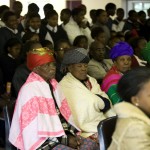

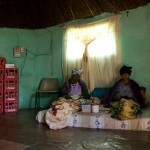
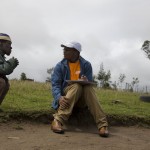
With its 5.5 million HIV sufferers, South Africa has among the highest infection rate in the entire world. In a country that still struggles with its inheritance of Apartheid, where unquestioned traditions remain a source of stability, where different cultures meet and clash, and where poverty and unemployment produce high crime rates and a widespread climate of violence, the fight against AIDS cannot be won by distributing condoms alone. In the Eastern Cape province, where around 4.5 million of the Xhosa people are living in dire poverty, the disease is still rampant despite the many initiatives designed to stop its spread.
Stopping the tide with tiny spoons
Buyiswa Mhambi was in her late 40s when the virus changed her life and the lives of her family forever. Two of her sisters died of AIDS in quick succession. None of the people around her knew enough about the disease and the risks and causes of infection. Today, Buyiswa has become an expert in this area and is in charge of the Empilisiweni (A Healthy Place) initiative that is committed to fighting against rigid prejudices, strict traditions, the stigmatization of HIV sufferers, and ignorance about the disease.
“We need a change in the hearts and minds of the people. That is the hardest thing. I often feel as if I am facing a giant wave and I have nothing but a tiny spoon to stop the tide” – this is how Buyiswa Mhambi, director of Empilisiweni, describes her feeling of helplessness in the face of an infection rate that refuses to lessen.
Epilisiweni was founded by Dr. Leslie-Anne Foster as part of the umbrella organization Masimanyane (“Let us unite”). In 1995, the passionate fighter for women’s rights, Dr. Leslie-Anne Foster, launched Masimanyane with the stated aim of offering gender-sensitive support to South African women affected by violence. As a South African citizen, she fights for women’s rights across the globe and is considered one of the leading proponents of her cause in South Africa, alongside Rashida Manjoo. Her organization offers protection for women, advises against violence, takes in raped or abused women and girls, and fights the increasing violence in the country.
One consequence of this culture of violence against women is the spread of HIV.
54 percent of HIV sufferers in South Africa are adult women. A large part of these have been infected as a result of rape. The UN has revealed that the risk of infection in South Africa is four times higher for young women and girls than for men. This is no wonder in view of the fact that South Africa has among the highest number of rapes in the entire world. From April 2006 to September 2007 alone, a total of 75,000 rapes were recorded, with Amnesty International estimating the number of unrecorded cases to be much higher. Few women report their ordeals. “I was alone in my village, my children were at school and everybody else was gone, when six young men came and gang-raped me in my home”, one victim reveals at one of Empilisiweni’s public information events. She did not go to the police, and the fear of public shame made her hide her experience from her husband and her friends.
From a source of advice to a large-scale HIV prevention initiative
“We cannot speak about HIV without speaking about violence and rape. Here, women are victims. We are taught to stay in the roles that we have been given”, Buyiswa Mhambi explains. The original purpose of Empilisiweni was to offer counselling to HIV-positive women and girls who oftentimes suppress any thought of the virus and its consequences after being subjected to rape. She explains her work: “When I started as a manager here in 2003, I stopped offering only advice to women who come to us. For me, it was more important to go and work with the people in the communities where they live.” After all, South African women are a crucial part of every village community. Buyiswa is convinced: “If we want to beat HIV in the long term and avoid more infections, we need everybody in every village to understand the risks of HIV and the consequences of letting the virus spread.”
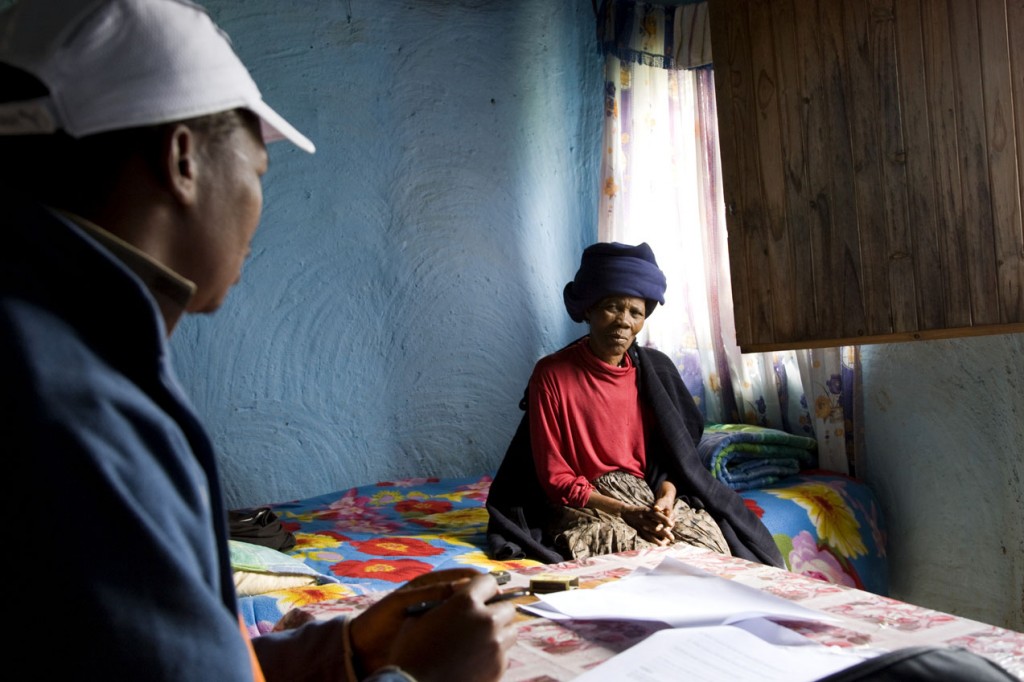
Empilisiweni looks at the structure of every village as a whole: its economic situation, the state of education and teaching materials, medical support by clinics or hospitals, infrastructure, the demographic situation, and the state of cooperation among the various authorities, with traditional or religious leaders and with the government. “Every place that we visit is different, with its unique problems and its unique challenges“, Buyiswa Mhambi explains. Sex remains a taboo subject, especially in the rural world of the Eastern Cape. HIV infections are commonly related to sexual intercourse alone, and sufferers are stigmatized by society. The effect is an unwillingness among people to take HIV tests and among HIV-positive people to “come out” by using preventative measures, such as protected sex, avoiding breastfeeding, caesarean sections etc. One of the key themes of the Empilisiweni Masimanyane campaign tackles exactly this problem: “Remove the Stigma – know your status!” It aims to treat HIV as a disease just like many other common diseases, such as tuberculosis, cancer, or diabetes.
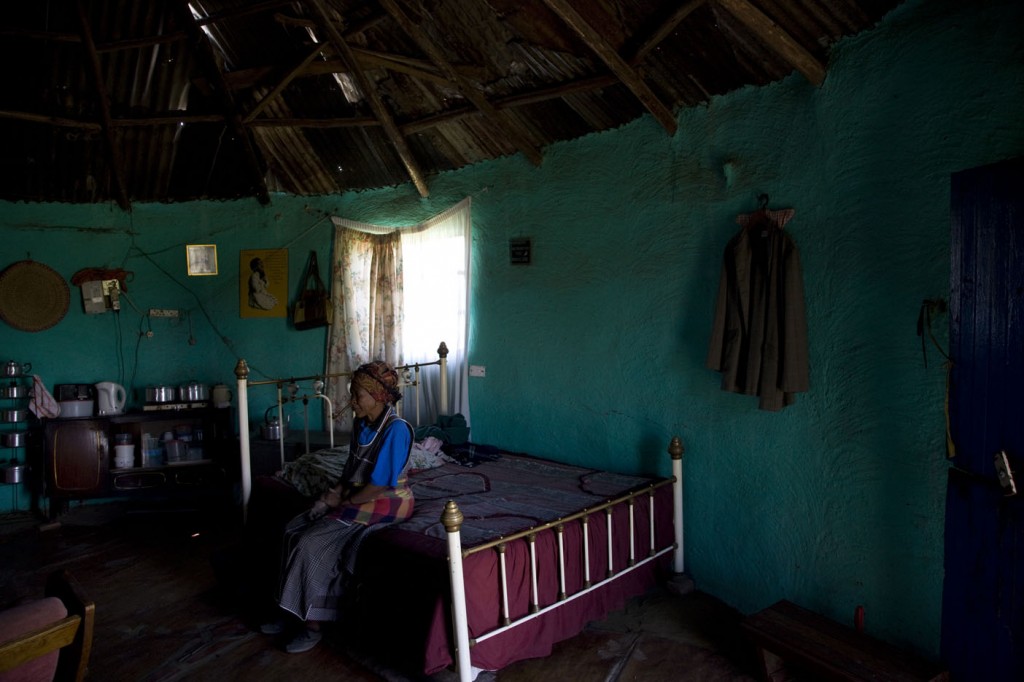
The men and women working on the campaign try to visit as many people as possible in their homes and talk to them about violence, sex, and diseases and their consequences. This is supported by public information events in schools, hospitals, and in the communities, as well as thorough health checks that are offered on site and free of charge. The campaign involves local community leaders, politicians or the police, as well as religious and traditional leaders.
Since Buyiswa Mhambi started to work for the organization, twelve villages, 24 schools, and five prisons have been included in the large-sale HIV prevention project. In May 2009, the Empilisiweni team started its work in Frankfort.
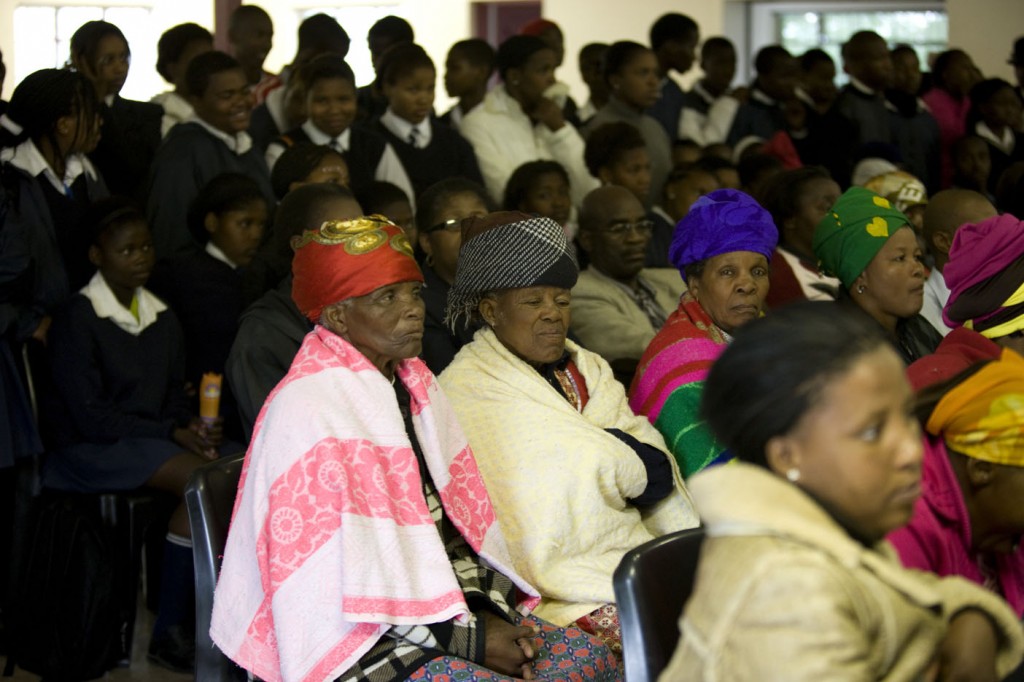
Frankfort – A place of contrasts
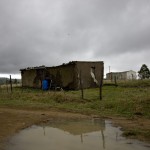
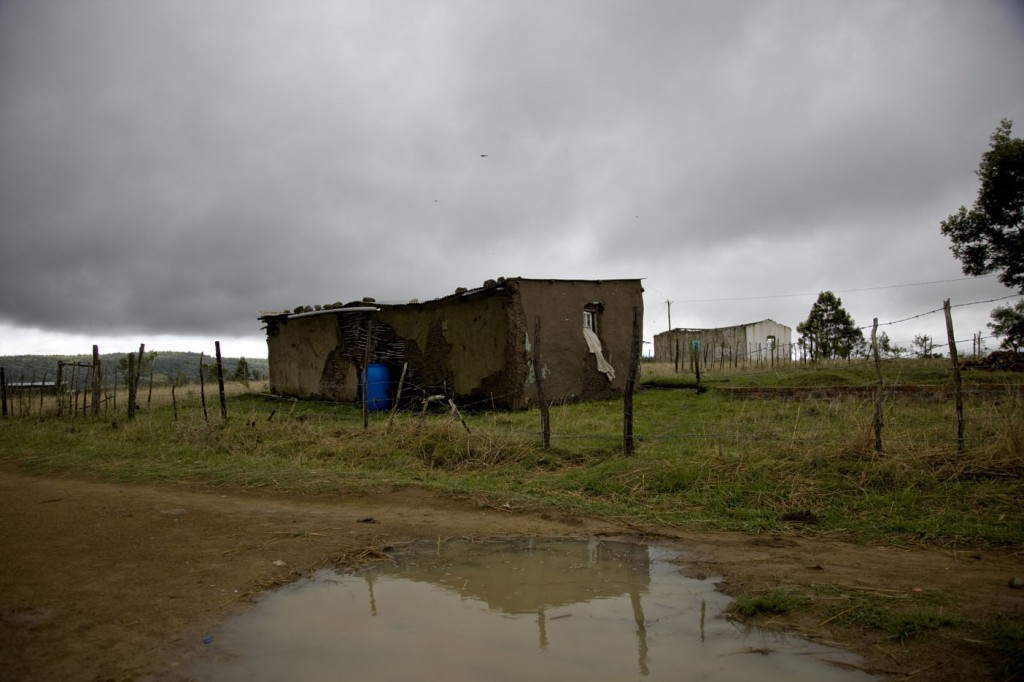
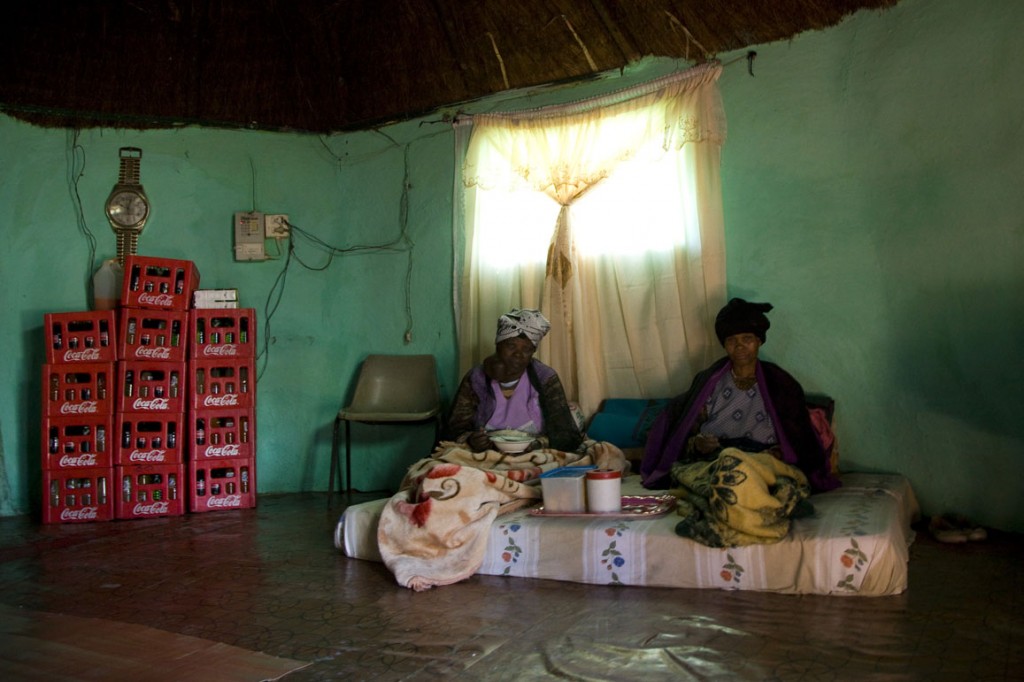
With its five villages, Frankfort lies about 80 km from East London. It is a place of extreme contrasts. In the main village, the colourful roundhouses of the Xhosa sit alongside German colonial-style buildings. The old German community was relocated when the homeland was set up in 1979. Nowadays, an old chapel, refurbished as a family home, the former school, the cemetery, and a number of administration offices are reminders of the German immigrants. Despite their solid structures, the buildings are starting to crumble: leaking roofs, no sanitary installations, broken windows, spreading mould, and disintegrating walls are the visible signs of the poverty of the community.
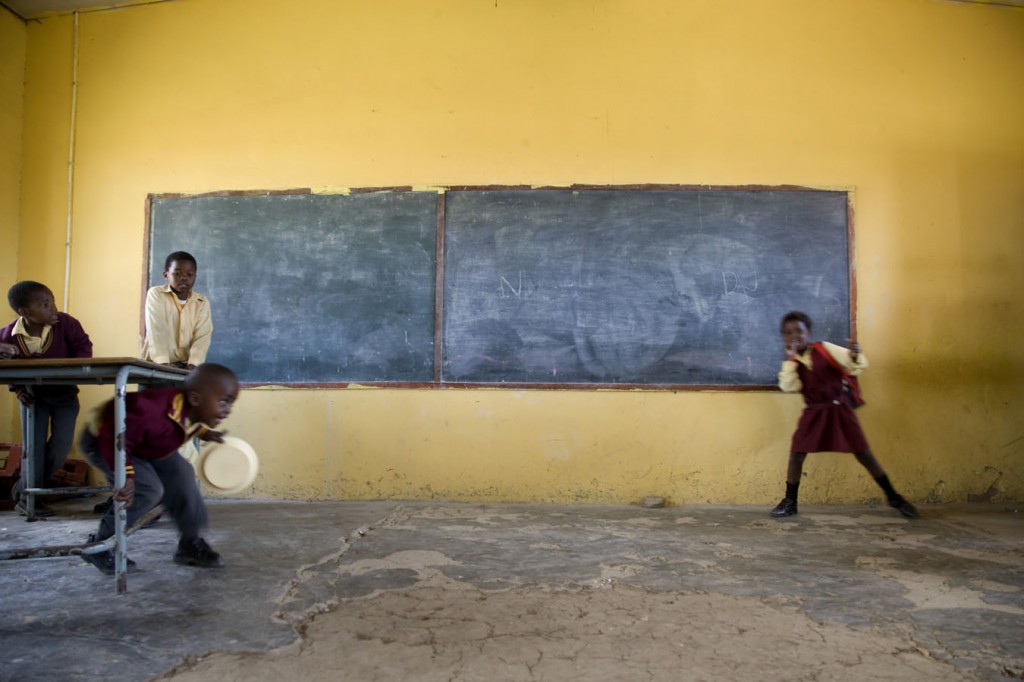
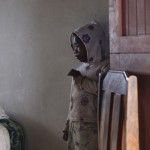
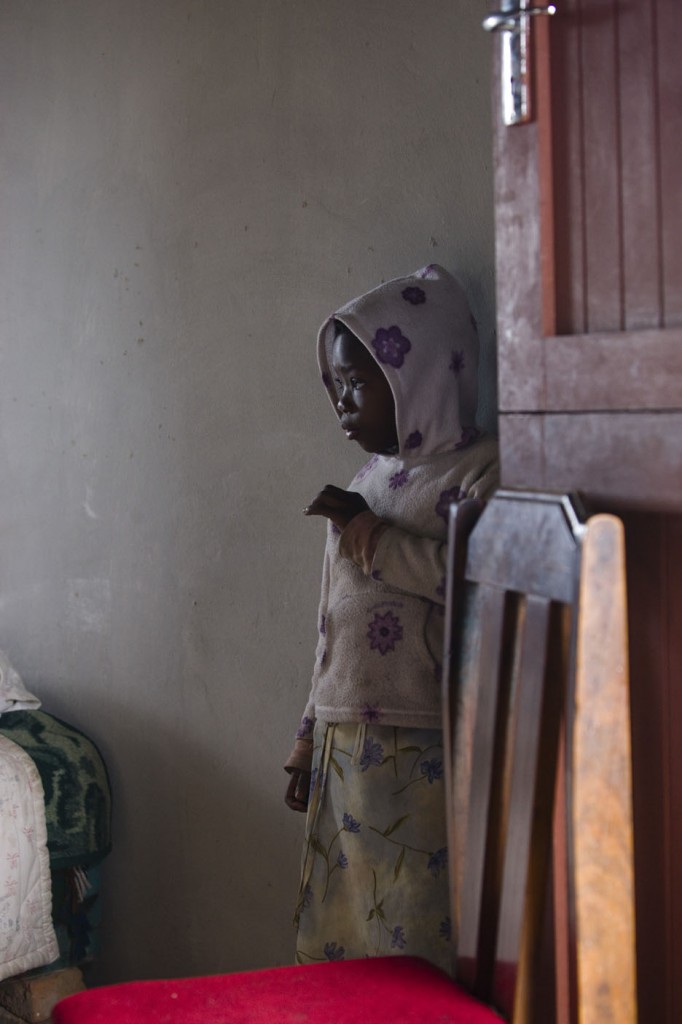
Frankfort’s schools are fighting with the sad fact that over half of their pupils have died of AIDS in the last ten years. Of the remaining children, around half are AIDS orphans. At the same time, there is not enough funding for teachers. The primary school employs 15 teachers for around 500 children. “That is another cause for the spread of HIV” Buyiswa Mhambi believes. “The children are not given the basic education that helps them distinguish good from evil, and they have too much time on their hands. Many teenagers are bored, frustrated, or very sad inside. We are all carrying so much pain around with us and we have to learn to cope. But how can a young man, who has lost his parents, who is shunned by the community, who is poor, living with relatives under the same financial and social pressures – how can he learn to cope with his pain? He will become angry. And anger causes violence.” In Frankfort, Empilisiweni works very closely with the police under Captain Tummani: training courses to raise awareness for violent crimes amongst policemen, projects to get youths away from the streets, and numerous information campaigns are the positive outcomes of this cooperation.
But the police cannot help against the widespread lack of knowledge and ignorance. This is why Buyiswa Mhambi has begun to train villagers as social workers. They accompany Empilisiweni for a year on its public events and home visits. After this year, three or four of the trained villagers are employed by the organization and continue its work in the villages.
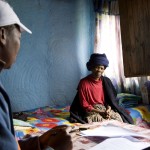
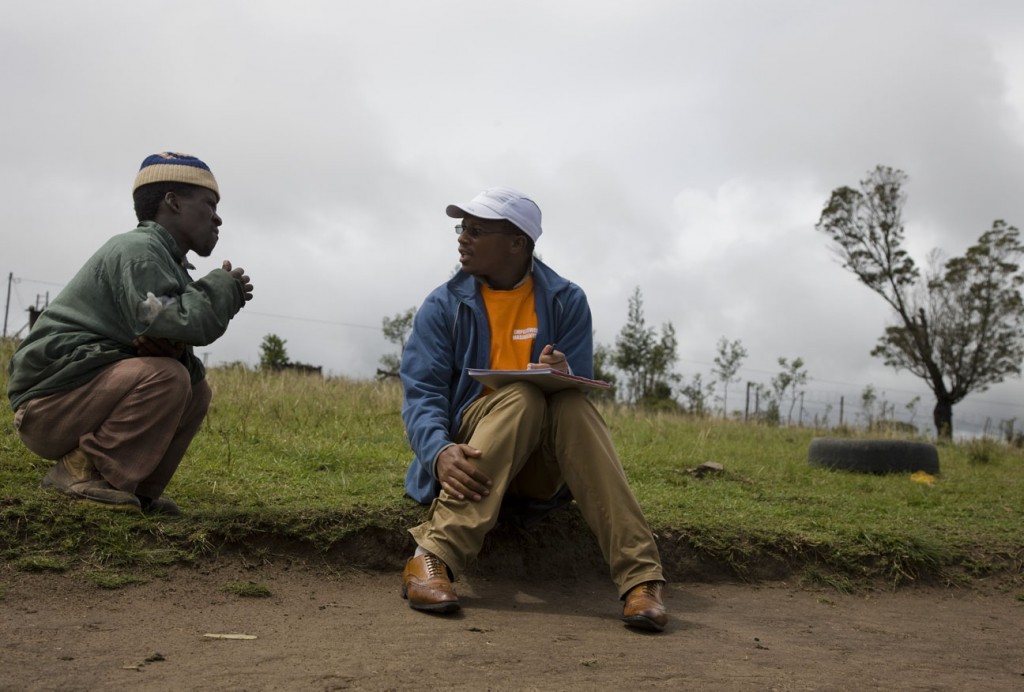
In her pursuit of real education, Buyiswa has been working with her team in a questionnaire on preventing and dealing with HIV infections. With this questionnaire, the Empilisiweni teams go from house to house. They talk openly about sex, HIV, about the personal situation of the people they are visiting, and about means of intervening and helping them. “We discover many ill people in our door-to-door tours. Many suffer from tuberculosis, from hunger. Many show obvious symptoms of health deficiencies or are plainly HIV-positive without realizing it. We then get a doctor, pay for transport to a hospital, and organize drugs and support”, Mhambi explains.
“I am a man. I cannot get Aids. Speak to my wife.”
Frankfort is a case study that shows that the need for education is particularly urgent in the rural countryside of the Eastern Cape. Almost every second person still had very basic questions about HIV: one old woman asked openly: “I am too old to do anything with my husband anymore. How could I get infected?” When told that she is at risk, because she helps out during births without wearing protective gloves, she was outraged and blamed depraved youths for the illness. One man welcomed the Empilisiweni team by stating: “I am a man. I cannot get AIDS. Speak to my wife.” After the talk, he volunteered for a free HIV test. One young woman admitted: “I have heard a lot about AIDS and seen things on the TV. But what is it? Can everybody get it?” Disastrous rumours, such as the belief that having sex with a virgin can heal men of AIDS, or that bad behaviour or too much sex cause AIDS, are also affecting the group’s work in Frankfort. Again and again, the teams have to explain how HIV is transmitted, how one can protect oneself, how to treat HIV-sufferers, and how to behave if one is infected.
“When we discover HIV-positive people in our visits or our tests, we help them by introducing them to organizations and foundations that work on the illness and its consequences or offer transport or food to sufferers. Many AIDS sufferers live too far from the next hospital to get any drugs. And people who cannot afford enough food also have to forego medication, because the side effects are too severe for malnourished patients”, Buyiswa Mhambi explains.
After a seemingly endless day, the passionate Empilisiweni manager sits back and contemplates: “The fight will continue. There is no hope of any respite. Even today, 1500 people in the Eastern Cape still get infected every single day. This country needs to learn that HIV is only a disease, and not a curse.”
Text und Fotos: Maryatta Wegerif
]]>
Please follow this link to the English version of this article.
Organisation Empilisiweni Masimanyane geht gegen Ignoranz gegenüber AIDS und Stigmatisierung der HIV-Infizierten vor
Buyiswa Mhambi ist eine fröhliche Frau, die pure Lebensfreude und Kraft ausstrahlt. Die 58jährige xhosastämmige Südafrikanerin nutzt jeden Grund, der sich ihr zum Lachen bietet. Dann bebt ihr ganzer Körper und lautes herzliches Gelächter erschüttert die Umgebung. Das braucht sie um einen Gegenpol zu Intoleranz, Ignoranz, Stigmatisierung und zahlreichen Tabus zu haben. Denn Buyiswa Mhambi ist eine Kämpferin im Krieg gegen den tödlichen HI-Virus und seiner Ausbreitung in Südafrika.
Südafrika gehört mit 5,5 Millionen HIV-Infizierten zu den Ländern mit der weltweit höchsten AIDS-Rate. Gerade in einem Land, das immer noch mit den Folgen der Apartheid zu kämpfen hat, in dem Traditionen Halt geben, verschiedene Kulturen aufeinander prallen und Armut und Arbeitslosigkeit für hohe Kriminalitätsraten sowie eine extreme Gewaltbereitschaft sorgen, ist der Kampf nicht allein durch die Verteilung von Kondomen zu gewinnen. Vor allem in der Eastern Cape-Region, wo etwa 4,5 Millionen des südafrikanischen Xhosa-Volkes in großer Armut leben, greift die Krankheit trotz vieler Maßnahmen immer weiter um sich.
Mit dem kleinen Löffel gegen die große Welle
Buyiswa Mhambi war Ende 40, als der Virus ihr Leben und das Leben ihrer Familie von Grund auf änderte. Kurz hintereinander starben zwei ihrer Schwestern an AIDS. Keiner aus ihrer Umgebung wusste genug über die Krankheit und ihre Risiken und Ansteckungsgefahren. Inzwischen ist Buyiswa Expertin auf dem Gebiet und leitet die Organisation Empilisiweni (gesunder Ort), die es sich zur Aufgabe gemacht hat festgefahrene Vorurteile, starre Traditionen, Stigmatisierung der AIDS-Infizierten und Unwissenheit zu bekämpfen.
„Wir müssen in den Herzen und den Köpfen der Menschen Veränderungen bewirken. Das ist sehr schwer. Ich fühle mich oft so, als würde eine große Welle auf uns zustürmen und als hätten wir nur kleine Löffel, um das Wasser aufzuhalten“, beschreibt Buyiswa Mhambi, Managerin der Organisation Empilisiweni, ihre Ohnmacht angesichts der nur leicht zurück gehenden Aidsrate.
Epilisiweni wurde von Dr. Leslie-Anne Foster ins Leben gerufen und gehört zu der übergeordneten Organisation Masimanyane („Lass uns vereinigen“ ). 1995 gründete die engagierte Frauenrechtskämpferin Dr. Leslie-Anne Foster die Organisation Masimanyane mit dem Ziel von Gewalt betroffenen Frauen in Südafrika einen geschlechterspezifischen Service zu bieten. Die Südafrikanerin setzt sich für die Rechte der Frauen weltweit ein und gehört mit Rashida Manjoo zu den bedeutendsten Frauenrechtskämpferinnen Südafrikas. Ihre Organisation bietet Schutz für Frauen, Beratungen gegen Gewalt, Aufnahme von vergewaltigten und missbrauchten Frauen und Mädchen und bekämpft die steigende Gewaltbereitschaft im Land.
Eine Folge der Gewaltbereitschaft gegen Frauen ist die Ausbreitung von HIV.
54 Prozent der HIV-Infizierten in Südafrika sind weibliche Erwachsene. Ein großer Teil davon hat die Krankheit durch Vergewaltigungen bekommen. So hat die UNO ermittelt, dass das Ansteckungsrisiko für junge Frauen und Mädchen in Südafrika bis zu viermal höher ist als bei Männern. Das ist kein Wunder, wenn man bedenkt, dass die Vergewaltigungsrate in dem Land weltweit zu den höchsten gehört. Alleine von April 2006 bis September 2007 wurden 75.000 Vergewaltigungsfälle dokumentiert. Doch laut Amnesty International liegt die Dunkelziffer sehr viel höher. Die wenigsten Frauen erstatten Anzeige. „Ich war allein im Dorf, die Kinder waren in der Schule und die restlichen Bewohner unterwegs, als sechs junge Männer kamen und mich in meinem Heim mehrfach vergewaltigten“, erzählt ein Opfer bei einer öffentlichen Veranstaltung von Empilisiweni. Zur Polizei ist sie damals nicht gegangen und auch ihrem Mann oder Freunden verheimlichte sie die Vergewaltigung aus Angst vor der Schande.
Von der reinen Beratung zum groß angelegten HIV-Präventionsprojekt
„Wir können nicht über HIV reden, ohne über Gewalt und Vergewaltigung zu sprechen. Hier sind die Frauen die Opfer, sie werden dazu erzogen, sich nicht aus dieser Rolle zu stehlen“, erklärt Buyiswa Mhambi. Das ursprüngliche Ziel von Empilisiweni war die Beratung von HIV-positiven Frauen und Mädchen, die gerade nach einer Vergewaltigung den Virus und seine Folgen verdrängen. „Als ich 2003 hier als Managerin anfing, habe ich die reine Beratung, bei der die Frauen zu uns gekommen sind, aufgegeben. Mir war es wichtiger, mit den Menschen vor Ort zu arbeiten und Gemeindearbeit zu leisten“, erklärt Buyiswa Mhambi ihre Arbeit. Denn schließlich sind die südafrikanischen Frauen ein zentraler Teil ihrer jeweiligen Dorfgemeinde. Buyiswa ist überzeugt: „Um langfristig HIV zu verhindern und weitere Ansteckungen zu vermeiden, müssen sich alle Menschen einer Dorfgemeinschaft über die Risiken von HIV und die Probleme, die die Ausbreitung des Virus vorantreiben, im Klaren sein“.
Empilisiweni betrachtet die Gesamtstruktur eines Dorfes: die wirtschaftliche Lage, der Zustand der Ausbildungsstätten und das Lehrmaterial, die medizinische Versorgung durch Kliniken und Hospitäler, die Infrastruktur, die demographische Situation sowie die Zusammenarbeit der einzelnen Behörden untereinander, mit den traditionellen und religiösen Führungskräften und mit der Regierung. „Jeder Ort, in den wir kommen, ist anders und bietet eigene Probleme und Herausforderungen“, erklärt Buyiswa Mhambi. Vor allem in den ländlichen Regionen des Eastern Cape ist Sexualität ein Tabuthema. Da die HIV Infektion ausschließlich mit der Übertragung durch Geschlechtsverkehr in Verbindung gebracht wird, werden Infizierte stigmatisiert. Dies führt zu einem geringen Interesse daran, sich einem HIV-Test zu unterziehen und sich als Infizierte durch Schutzmaßnahmen wie Kondome, Verzicht auf Stillen, Kaiserschnitt etc. zu „outen“. „Remove the Stigma – know your status!“ lautet entsprechend der zentrale Slogan der Kampagne von Empilisiweni Masimanyane. Dabei wird HIV als eine Krankheit von vielen in Zusammenhang mit z.B. Tuberkulose, Krebs und Diabetes gebracht.
Die MitarbeiterInnen versuchen, in flächendeckenden Hausbesuchen mit den Menschen über Gewalt, Sexualität, Missbrauch, Krankheiten und ihre Folgen ins Gespräch zu kommen. Flankierend werden öffentliche Aufklärungsveranstaltungen an Schulen, in Klinken und in Gemeinden organisiert sowie umfassende kostenlose Gesundheitstests vor Ort angeboten. Dies geschieht unter Einbeziehung lokaler Prominenz aus Politik, Polizei und natürlich religiöser und traditioneller Führungspersönlichkeiten.
Seit Buyiswa Mhambi ihre Arbeit in der Organisation aufgenommen hat, wurden zwölf Dörfer und 24 Schulen sowie fünf Gefängnisse in das groß angelegte HIV-Präventionsprojekt eingebunden. Im Mai 2009 begannen die Empilisiweni-Mitarbeiter mit ihrer Arbeit in Frankfort.
Frankfort – ein Dorf der Gegensätze
Der Ort mit seinen fünf Dorf-Gemeinden liegt 80 km von East London entfernt und zeichnet sich durch extreme Gegensätze aus. Im Hauptdorf treffen die runden und farbenprächtigen Lehmhütten der Xhosas auf deutschen Kolonialstil. Die ehemals deutsche Gemeinde wurde im Zuge der Homelandbildung 1979 ausquartiert. Jetzt erinnern eine zum Wohnhaus umfunktionierte Kapelle, eine alte Schule, der Friedhof und diverse Verwaltungsgebäude an die deutschen Immigranten. Trotz des sehr soliden Baustils fallen die Gebäude zusehends zusammen: Löchrige Dächer, fehlende sanitäre Anlagen, zerbrochene Fenster, verschimmelte Wände und heruntergekommene Zwischenmauern sind nur einige Zeichen, die die Armut dieses Dorfes aufzeigen.
Die Schulen kämpfen mit der Tatsache, dass über die Hälfte der Schüler in den letzten zehn Jahren an AIDS gestorben ist. Von den restlichen Kindern sind etwa die Hälfte Aidswaisen. Gleichzeitig fehlt es an Geld für Lehrer. Die Grundschule hat 15 Lehrer für rund 500 Schüler. „Das ist ein weiteres Problem, das zu der Verbreitung von HIV führen kann“, meint Buyiswa Mhambi. „Zum einen haben die Schüler keine Grundbildung, die ihnen hilft, Gut von Böse zu unterscheiden, und zum anderen haben sie zu viel Freizeit. Viele Jugendliche langweilen sich, sind frustriert und sehr traurig. Wir tragen so viel Schmerz in uns und wir müssen lernen, damit umzugehen. Doch wie soll ein Jugendlicher, der seine Eltern verloren hat, gemieden wird, arm ist und bei Verwandten wohnt, die meistens finanziell und sozial überfordert sind, lernen, mit dem Schmerz umzugehen? Das macht wütend. Und Wut produziert Gewalt.“ In Frankfort arbeitet Empilisiweni sehr eng mit der Polizei unter der Leitung von Captain Tummani zusammen: Fortbildungen zur Sensibilisierung der Polizisten bei Gewaltverbrechen, Projekte für Jugendliche, um sie von der Straße zu holen, und zahlreiche Aufklärungsveranstaltungen sind ein positives Ergebnis dieser Kooperation.
Doch gegen die vorherrschende Unwissenheit und Ignoranz kann die Polizei nichts ausrichten. Darum bildet Buyiswa Mhambi Dorfbewohner zu Sozialarbeitern aus. Diese arbeiten während eines Jahres gemeinsam mit Empilisiweni bei Veranstaltungen und Hausbesuchen zusammen. Nach dem Jahr werden drei bis vier der ausgebildeten Dorfbewohner weiter beschäftigt und führen die Arbeit im Dorf weiter.
Um für eine fundierte Aufklärung zu sorgen, entwickelte Buyiswa gemeinsam mit ihren Mitarbeitern einen Fragebogen zum Thema HIV-Prävention und Umgang mit der Krankheit. Mit dem Fragebogen ausgestattet klopfen die Mitarbeiter einzeln an jede Tür und bitten um Einlass. Dann reden sie schonungslos offen über Sex, HIV, die persönliche Situation des jeweiligen Bewohners und über Möglichkeiten zu helfen und einzugreifen. „Wir entdecken so viele kranke Menschen bei unseren Door-to-Door-Begehungen. Viele haben TB, sind unterernährt, weisen deutliche Mangelerscheinungen auf oder sind offensichtlich HIV-positiv, ohne es zu realisieren. Wir organisieren dann einen Arzt, übernehmen die Transportkosten zur Klinik, besorgen Medikamente und Hilfe“, erzählt Mhambi.
„Ich kann als Mann gar kein AIDS kriegen. Rede mit meiner Frau.“
Das Beispiel Frankfort zeigt deutlich, dass der Aufklärungsbedarf in den ländlichen Regionen des Eastern Cape besonders hoch ist. Fast jeder Zweite hatte grundlegende Fragen zum Thema HIV: Eine alte Frau zum Beispiel sagte rundheraus: „Ich bin zu alt, um mit meinen Mann was anfangen zu können. Wie kann ich mich da noch anstecken?“ Auf den Hinweis, dass sie zum Beispiel bei Geburten mithilft, ohne sich mit Handschuhen zu schützen, winkte sie schnaubend ab und schob die Krankheit schimpfend auf die verwahrloste Jugend. Ein Mann begrüßte den Empilisiweni-Mitarbeiter direkt mit den Worten: „Ich kann als Mann gar kein AIDS kriegen. Rede mit meiner Frau.“ Nach dem Gespräch meldete er sich zum kostenlosen Test an. Eine junge Frau gestand: „Ich habe oft von AIDS gehört und viel darüber im Fernsehen gesehen. Aber was ist es genau? Kann das jeder kriegen?“ Verheerende Gerüchte, wie zum Beispiel, dass der Sex mit einer Jungfrau Männer von AIDS heilt, oder schlechtes Benehmen und zu viel Sex zu AIDS führen, erschweren die Arbeit auch in Frankfort. Immer wieder erklären die Mitarbeiter, wie AIDS übertragen wird, wie man sich am besten schützt, wie man mit HIV-positiven Menschen umgeht und sich selbst bei einer Ansteckung verhalten sollte.
„Wenn wir bei den Befragungen oder bei den Tests HIV-positive Menschen entdecken, helfen wir ihnen, indem wir sie mit Organisationen und Foundations zusammenbringen, die sich mit der Krankheit und den Folgen beschäftigen und den Menschen mit Transport und Nahrung helfen. Denn viele Aidskranke wohnen zu weit von den Kliniken entfernt, um an die Medikamente zu kommen. Wer sich kein Essen leisten kann, muss auf die Medizin verzichten, denn die Nebenwirkungen sind dann zu stark“, erklärt Buyiswa Mhambi.
Nach einem endlos langen Tag resümiert die engagierte Empilisiweni-Managerin: „Der Kampf geht immer weiter, es ist keine Entspannung in Sicht. Noch immer stecken sich im Eastern Cape täglich 1500 Menschen an. Dieses Land muss lernen, dass es sich bei HIV nur um eine Krankheit handelt und nicht um einen Fluch!“
(ca.12.320 Zeichen)
Text und Fotos: Maryatta Wegerif
]]>
Gewalt, Vergewaltigung, Armut und Orientierungslosigkeit sind Probleme, mit denen sich das Land Südafrika zunehmend beschäftigt. Vor allem die Gewalt gegen Frauen und Mädchen hat in den letzten Jahrzehnten stark zugenommen. Die Organisation Masimanyane (lass uns vereinigen) wurde 1995 von Dr. Leslie-Anne Foster ins Leben gerufen und dient dem Ziel, von Gewalt betroffenen Frauen einen gender-spezifischen Service anzubieten. Eine Folge der zunehmenden Gewaltbereitschaft gegen Frauen ist die Ausbreitung des Virus HIV in Südafrika.
2002 wurde die Unterorganisation Empilisiweni (Gesunder Ort) mit Sitz in King Williams Town gegründet.
Vorwiegende Aufgabe von Empilisiweni ist die öffentliche Aufklärung zum Thema HIV/Aids. Vor allem in den ländlichen Regionen des Eastern Cape ist Sex ein Tabuthema. Da die HIV Infektion ausschließlich mit der Übertragung durch Geschlechtsverkehr in Verbindung gebracht wird, werden Infizierte stigmatisiert. Dies führt zu einem geringen Interesse daran, sich einem HIV-Test zu unterziehen und sich als Infizierte durch Schutzmaßnahmen wie Kondome, Verzicht auf Stillen, Kaiserschnitt etc. zu „outen“.
Entsprechend ist ein zentraler Slogan der Kampagne „Remove the Stigma – know your status!“
Dabei wird HIV als eine Krankheit von vielen in Zusammenhang mit z.B. TB, Krebs und Diabetes gesetzt. Die MitarbeiterInnen versuchen in flächendeckenden Hausbesuchen mit den Menschen über Gewalt, Sex, Krankheiten und ihre Folgen ins Gespräch zu kommen. Flankierend werden öffentliche Aufklärungsveranstaltungen an Schulen, Klinken und in Gemeinden organisiert sowie kostenlose umfassende Gesundheitstests vor Ort angeboten. Dies geschieht unter Einbeziehung lokaler Prominenz aus Politik, Polizei und natürlich religiösen und traditionellen Führungspersönlichkeiten.
Die Fotodesignerin Maryatta Wegerif (36), hat Empilisiweni zwei Wochen bei der Arbeit in den Dörfern begleitet. Dabei entstand eine Fotoreportage mit beeindruckenden Bildern direkt aus der Mitte der Xhosa-Gesellschaft im Eastern Cape. Sie war zu Gast in den Häusern und schaffte es Freundschaften zu schließen, die ihr einen außergewöhnlichen Einblick in das Leben der Menschen ermöglichten.
]]>